In Conversation With London Gallerist Sadie Coles
24.02.26 | Article by Keshav Anand | Art, culture, interview | MM20 Click to buy
At the helm of London’s most exciting gallery, art dealer Sadie Coles is a true pioneer of support, having been at the forefront of a flourishing and complex contemporary art landscape for decades. After being closely entwined with the Young British Artists movement since the inception of her nearly eponymous space, Sadie Coles HQ, in April 1997, Coles has gone on to champion and represent some of the world’s most influential artists, from John Currin, Urs Fischer and Sarah Lucas, to Elizabeth Peyton, Richard Prince and Ugo Rondinone. Coles’ discerning eye has been critical in the building of lasting careers, and her outlook continues to forecast and shape art world trends today. Consistently housed in distinctive and often times unexpected spaces, Sadie Coles HQ has been itinerant over the years, first launching on Heddon Street, expanding to Mayfair a decade later, and then to spaces in the West End, with a sporadic programme of off-site projects punctuating each year.
From 16 November 2021 to 29 January 2022, installed in eight triangular sections, the room divided like a multi-coloured pizza, Sadie Coles HQ’s Kingly Street gallery presented works by a dynamic group of burgeoning artists comprising Natalie Ball, Kevin Beasley, Georgia Gardner Gray, Tau Lewis, Jonathan Lyndon Chase, Simphiwe Ndzube, Agata Słowak and Frieda Toranzo Jaeger. Curated by Coles, each of the artists in the show — entitled WHAT DO YOU SEE, YOU PEOPLE, GAZING AT ME — explore the body and express its capacity for action, in turn arousing a dialogue with the viewer’s own sense of self. Among the standout works shown were pieces by Georgia Gardner Gray, whose practice embraces painting, installation and theatre. Exploring archetypes of contemporary life, alongside her paintings, the artist brought three mannequins into the gallery space. The unnerving figures were envisaged in states of constant self-improvement, permanently positioned in repetitive physical effort.
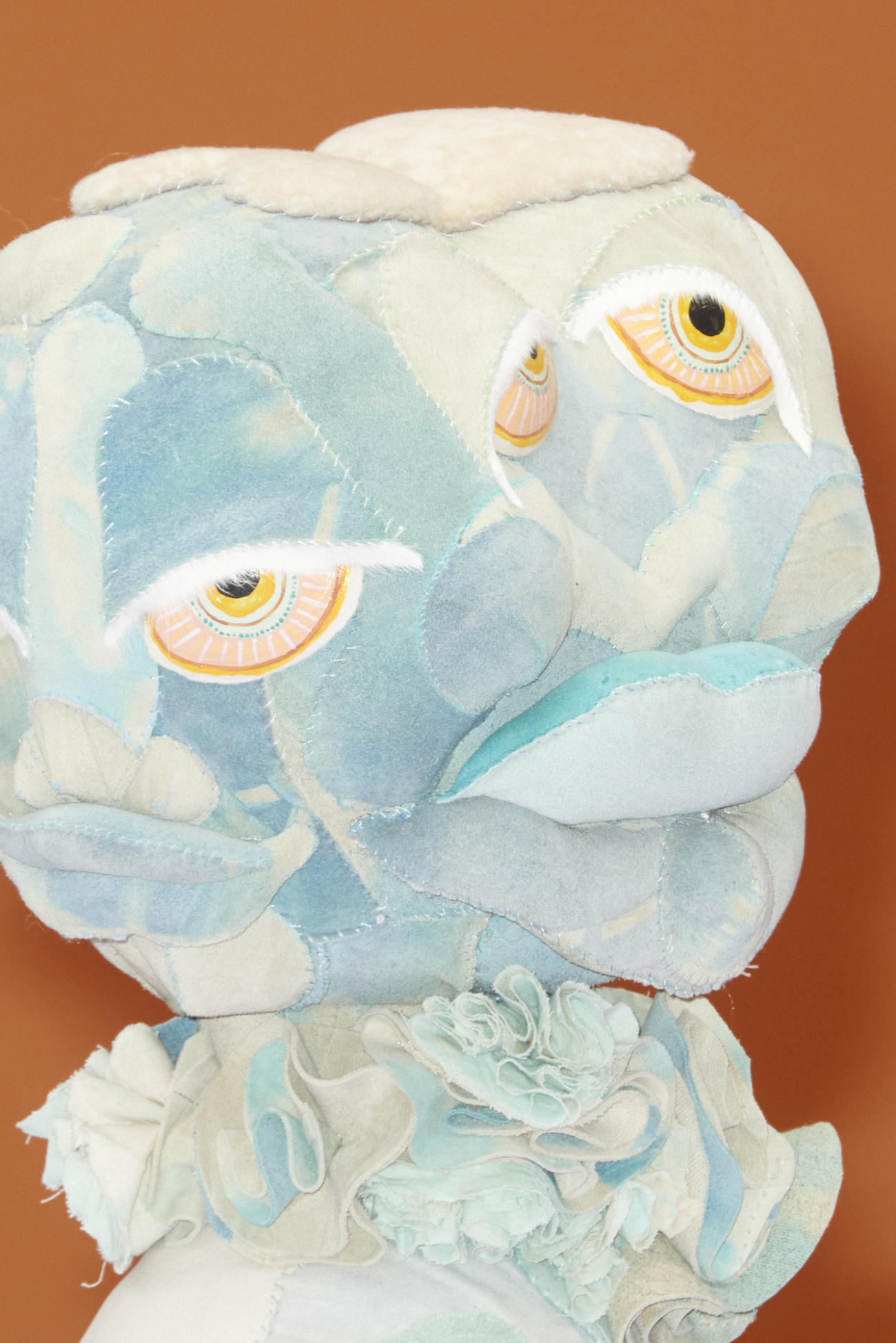
Elsewhere, Tau Lewis’ Mutasis Moon is an intricate sculptural portrait constructed from found, gathered, gifted and recycled materials drawn from the artist’s personal environments, including her family home in Negril, Jamaica. Shown in dialogue with the sculpture was a wall based textile work by Lewis that appears almost like a celestial chart or map depicting birth cycles, composed of collaged fragments. Installed in the most subdued slice of the colour-wheel-pizza were Simphiwe Ndzube’s works. The artist’s otherworldly realm is rooted in African fables, South Africa’s history of apartheid and its traumas that persist in the postcolonial present. Set among fecund hills of lurid greens and pinks, Ndzube’s characters seem to act as interlocutors, eager to speak, demanding to see and be seen. Almost hallucinatory, the scenes reverberate with abundance. To learn more about the compelling exhibition and gain Coles’ insight into the art world’s future, Keshav Anand spoke with the pioneering gallerist.
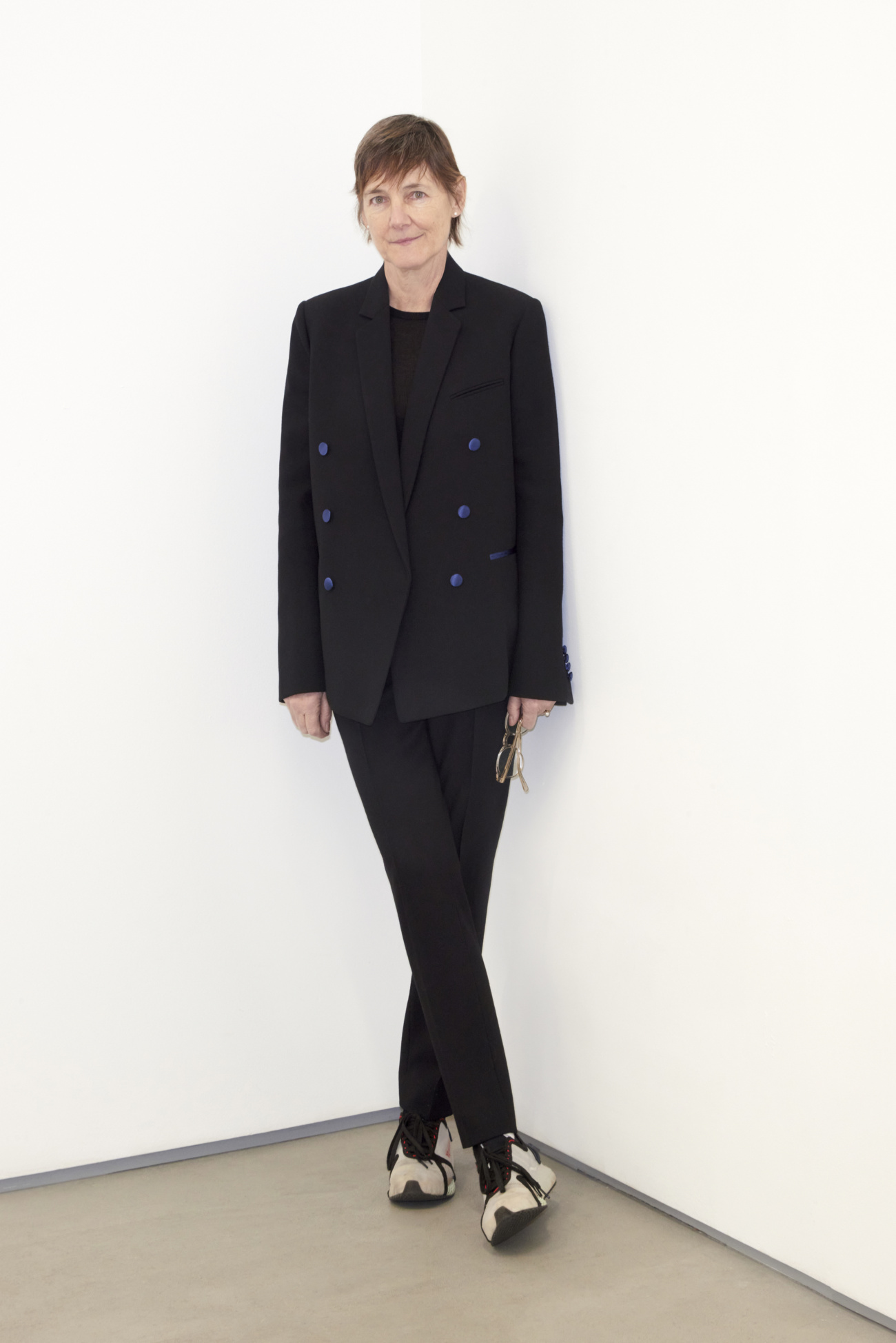
Keshnav Anand:
What is the thinking behind the selection of artists included in WHAT DO YOU SEE, YOU PEOPLE, GAZING AT ME?
Sadie Coles:
Each of the participating artists presents a revitalising position on figuration, through painting, sculpture and installation, all from specifically different contexts. Many of their practices represent historically marginalised or overlooked voices in a way that speaks to the present day, manifesting the body as a potent symbol to express individual perspectives and potential for action.
KA:
Where do you look to discover new artists?
SC:
Like anyone else, I go to exhibitions, look at art magazines and digital platforms, do my research. Mostly I ask artists and curators who they find interesting.
KA:
As commercial gallery shows become increasingly curated, Sadie Coles HQ’s presentations have long been at the forefront of this approach. How do you see your roles as gallerist and curator relating to one and other?
SC:
I am very clear that I have a shop, and I am programming or filling my shop with the art that I believe has agency and that I can communicate and enthuse about. Museums have more time, more critical framework and frankly more expertise to mount far more meaningful group shows than any gallery. But since galleries are essentially a success or failure based on the selection and taste of the owner, it is indicative to see new artists highlighted in a gallery group show. These shows are a statement of intent, and capture the zeitgeist as the gallerist sees it. Which may not be how anyone else sees it, of course.
KA:
Could you expand on the dialogue between the works presented in WHAT DO YOU SEE, YOU PEOPLE, GAZING AT ME?
SC:
The limitations of digital images to present objects in the round mean that sculpture is less well represented on many platforms and in recent years painting has dominated, specifically figurative paintings, which are suited to the digital medium. Showing both forms together emphasises how one embellishes the other. The works on view address myriad subjects concerning identity — from sexuality and gender, to feminism and race — collectively challenging or dismantling prevailing social assumptions and hierarchies. Their approach to both two- and three-dimensional media is an essential component in formulating meaning. Different traditional and non-traditional approaches and materials play an important part in many of their works, and act as a means of exploring identity, shared experience and performativity.
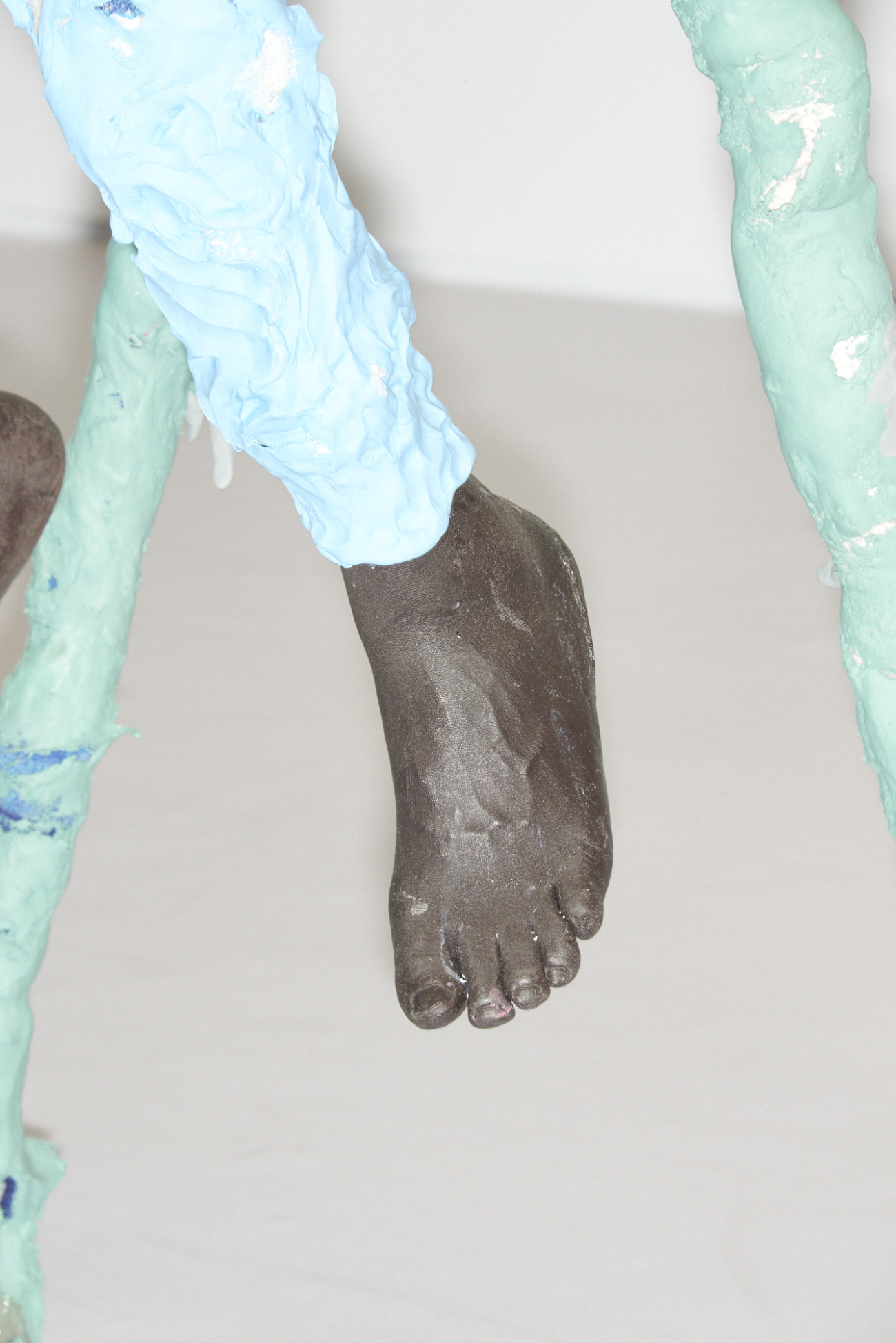
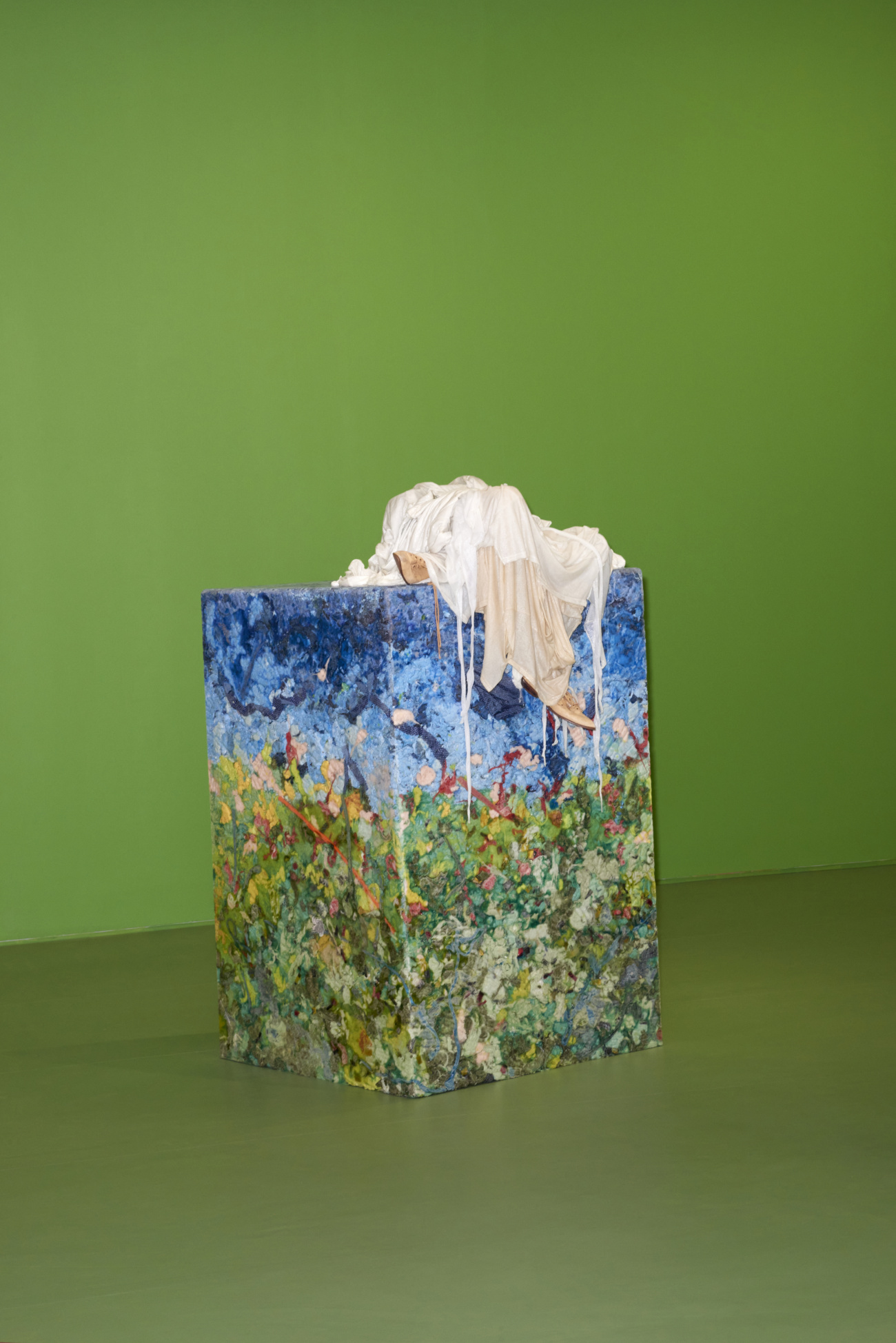
Within the three-dimensional works there is a potent sense of physical, corporeal presence — that in turn initiates a dialogue with the viewer. For example, Kevin Beasley uses raw cotton sourced from his family’s farm in rural Virginia as a powerful material gesture to synthesise the shared historical, social and emotional experiences of Black people in the US. Natalie Ball incorporates found and artificial materials such as deer hooves and textiles to contest expectations of indigenous identities. While Georgia Gardner Gray reworks found store mannequins to express and humour the social performativity related to contemporary pressures of self-optimisation.
KA:
What is the significance of the show’s title?
SC:
The title is drawn from a song in the 1968 musical fantasy film Chitty Chitty Bang Bang. There is a sad scene where the main characters have to pretend to be marionettes, not humans, and they are displayed as figures observed in a rotating music box. Our exhibition is a spinning carousel of figures presented in a disparate variety of forms, emphasised by our exhibition design. The title is an open-ended question that invites the viewer to interrogate their own gaze or perspective, and to engage with the figures, their identities, gender, sexuality, and challenges that come with all of those facets that make people who they are.
KA:
I understand the Kingly Street site housing your gallery was once a nightclub. I’m curious whether the history was something that drew you to the space and how you reimagined the architecture for the purpose of a gallery?
SC:
It is absolutely exciting to inhabit a former nightclub, especially a notorious one, but initially the space was a warren of sunken floors, rooms painted black, sticky surfaces and odd spaces. We opened it all up and then discovered the skylights. So sadly nothing of the darkness of La Valbonne is left but I hope there are a few dissolute ghosts.
KA:
Can you talk about your use of colour to assign space in the show?
SC:
I wanted to create a space where the two forms of each artist, wall based and 3D, could clearly exist in their own space without building lots of walls, and which suggested a carousel: a moving 360 degree rotation which is how you move around a static figure. Having no walls also means that each individual presentation is in close dialogue with the others. Each artist chose their colour, and we had no clashes, which was a surprise. The eight equal segments of differing colours were chosen by each of the artists.
KA:
How do you see the future of the art world evolving in a post-pandemic era?
SC:
Coming out of the pandemic and post-Brexit, already quite seismic events, the art world here is facing a changing environment. Servicing expanding global and digital audiences, new patterns of behaviour relating to communication, transactional process and access, and challenges to old models of artist representation, are all urgent and necessary. Digital and blockchain are relatively new tools that will help implement innovations for galleries to work best for their artists in building audiences, but this will also inevitably impact the development of new form, content and receptacles for art. I think the next decade will be spectacular.
KA:
What can we look forward to next from Sadie Coles HQ?
SC:
The unexpected.